

From Loss to Legacy: Iryna Zarutska and the Birth of a Mural Movement


A Refugee’s Journey and a Tragic Night
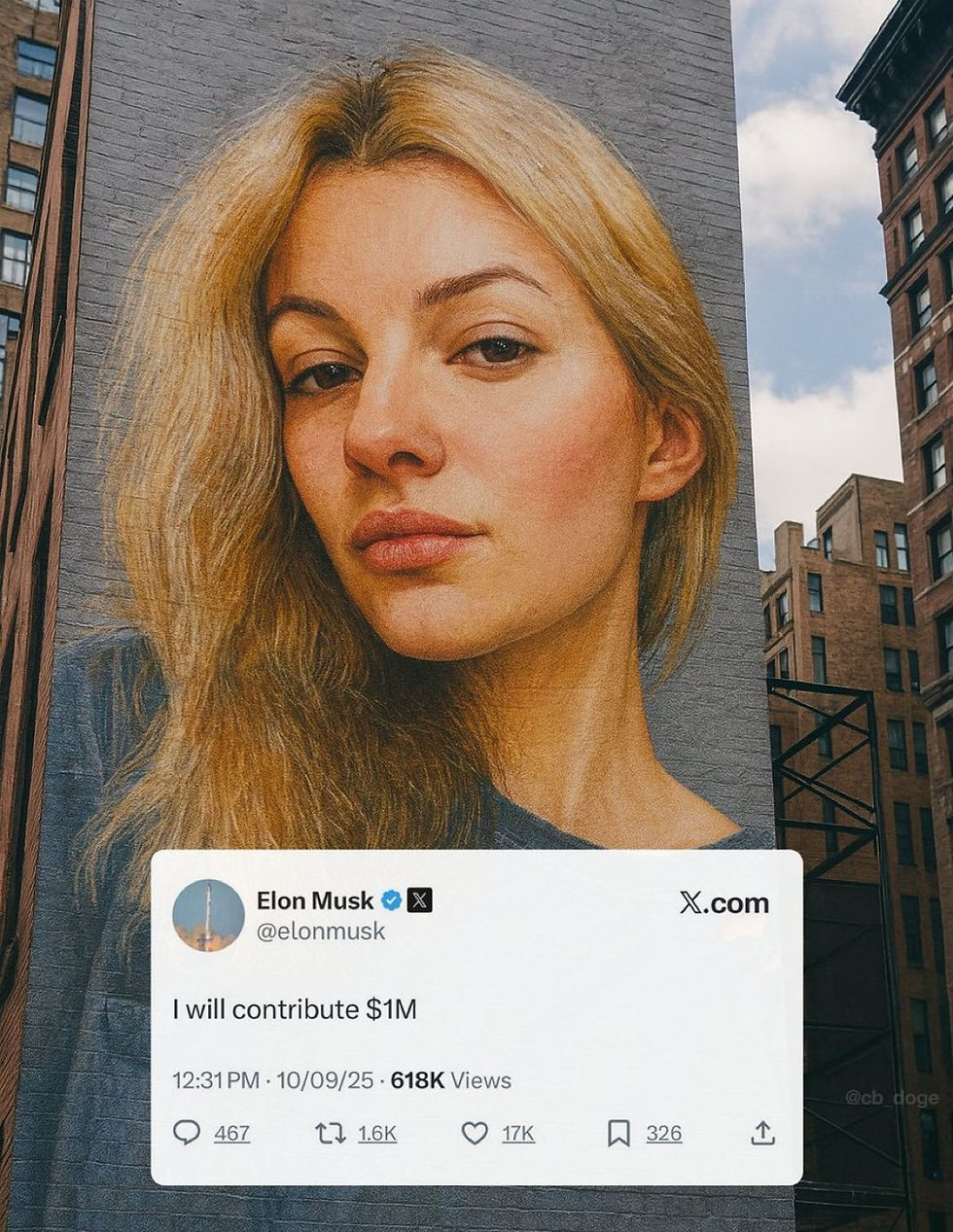
On an ordinary summer evening in 2025, 23-year-old Iryna Zarutska boarded the light-rail train in Charlotte, North Carolina, heading home after finishing her shift at a local pizzeria. Iryna had come to the United States as a refugee in August 2022, escaping the war in Ukraine to seek safety and a new start for herself in America [1]. In Charlotte, she worked hard—her job at Zepeddie’s Pizzeria was a humble step toward building the future she dreamed of. That night, still dressed in her work uniform, Iryna took a seat on the Lynx Blue Line train as she had many times before. But in a moment of shocking violence, her journey was cut short. A fellow passenger, a stranger with a violent past, suddenly attacked her without warning. Iryna was fatally stabbed multiple times in the neck as other riders watched in horror [2]. The attack on that unassuming weeknight – August 22, 2025 – was random, brutal, and captured on surveillance video. Iryna Zarutska, who had fled halfway across the world to find peace, lost her life in the very place she hoped would be safe.
News of this tragedy sent shockwaves far beyond Charlotte. The graphic video of the assault quickly spread online, sparking outrage on social media and in communities across the country [2]. How could this happen to someone who came seeking refuge? Why was a repeat violent offender free to roam public spaces? These questions stirred anger, grief, and calls for justice. Iryna’s grieving family, in their first public statement, expressed both sorrow and resolve. “This could have been anyone riding the light rail that night. We are committed to making sure this never happens again,” they declared [1]. To many, Iryna’s story felt painfully personal – she was a young woman who could have been a neighbor, a friend, or a coworker. The senselessness of her loss and the imagery of the video galvanized people to demand that her death not be in vain.
Outrage Sparks an Artistic Tribute
In the days that followed, as debates about crime and policy raged, an unexpected response took shape – not in the halls of government, but on the walls of city streets. Eoghan McCabe, a Silicon Valley tech CEO, was among those deeply moved by Iryna’s story. Determined to ensure that Iryna would not be forgotten, McCabe proposed a bold idea: a nationwide mural project to honor her memory [2]. He saw in public art a way to both pay tribute to Iryna and to protest the circumstances of her death. Just as the murder of George Floyd in 2020 had prompted a nationwide outpouring of murals in support of racial justice [2], McCabe believed that art could similarly transform the public’s anger and grief for Iryna into something constructive and visible.

Late one night on social media, McCabe announced his plan. On X (formerly Twitter), he wrote that he was offering $500,000 in $10,000 grants to commission murals of Iryna Zarutska’s face in prominent locations across American cities [2]. Any artist could apply for a grant to paint a large-scale portrait of Iryna on a building or wall in their city. It was a call to action for the art community, aiming to create dozens – even hundreds – of murals so that Iryna’s image and story would appear in murals from coast to coast. McCabe’s post struck a chord. Within hours, messages from artists and supporters poured in. By the next day, he shared an exciting update: funding had already been secured for nearly 300 murals, and he had heard from over 800 interested artists eager to take part [2]. The idea had swiftly grown into a movement. What began as one man’s offer quickly gathered momentum as people across the country said “yes” – they would pick up paintbrushes and spray cans to remember a young Ukrainian woman most had never met, but whose fate had touched their hearts.
Rallying Support from Tech Leaders and Celebrities

McCabe’s initiative gained even more visibility when prominent figures took notice. One of the first was billionaire entrepreneur Elon Musk, who has a massive online following and a penchant for bold moves. Upon seeing McCabe’s mural campaign for Iryna, Musk publicly replied that he would contribute $1 million to support the effort [2]. This generous pledge effectively doubled the campaign’s resources overnight and sent a message that this cause was significant. Musk had been vocal about Iryna’s case, expressing frustration at how the incident was handled and covered, so backing the mural project was a way for him to turn that frustration into action [1][2].
Not only Musk, but other well-known personalities stepped up as well. Controversial internet influencer Andrew Tate – himself no stranger to headlines – similarly vowed to donate $1 million for Iryna’s murals [2]. With these high-profile contributions and many smaller donations from ordinary citizens, the funding for the mural movement surpassed all expectations. In total, over $2.5 million was raised, enough to finance hundreds of murals and related art installations nationwide [2]. Organizers began coordinating with artists in dozens of cities, working out locations and designs. In fact, they were soon in talks with hundreds of artists across the country, scouting “high visibility” walls and buildings where Iryna’s portrait could be displayed prominently [1][2]. The goal was not just to paint a lot of murals, but to place them in spots where thousands of people would see Iryna’s face every day – city centers, busy intersections, public transit stations – ensuring her story could not be ignored.

The people driving this effort were motivated by more than just memorializing Iryna; they wanted to send a wider message. As one organizer explained anonymously to the press, there was a determination “not to let Zarutska be forgotten or ignored” after such a brutal loss of life [1]. Many supporters also saw the murals as a form of protest: a peaceful but powerful statement against failures in the system that allowed a violent criminal to be free. It was a way of saying we remember her, and we demand better. The campaign’s slogan on fundraising pages captured this sentiment poignantly: “Iryna Zarutska did not ask to be a martyr” [2]. By turning Iryna into the face of a public art movement, supporters hoped not only to honor her, but also to draw attention to issues of public safety, accountability, and how society treats its most vulnerable.
What was unfolding went beyond a typical charity drive – it was the birth of a modern mural movement, fueled by social outrage and compassion. In the past, one might expect petitions or marches in response to such an event; here, artists and donors were collaborating to fill America’s walls with a message. As murals of Iryna began to be planned in city after city, the effort drew comparisons to the global wave of street art memorials that followed George Floyd’s death. Indeed, after Floyd was killed, murals and street paintings of his likeness appeared in countless cities around the world as calls for justice [1]. Now, in 2025, a similar phenomenon was taking shape for Iryna Zarutska – a network of murals that would span the nation, making sure her face and story remain in the public eye.
Murals as Cultural Memory and Protest
The use of murals to respond to tragedy or injustice has deep roots in art history. Although painting on walls is an ancient practice, the mural as a form of social and political expression truly flourished in the 20th century [3]. One famous example is the work of Mexican muralist Diego Rivera. In post-revolutionary Mexico of the 1920s and 1930s, Rivera and others painted epic murals that weren’t just art for art’s sake – they carried powerful messages about national identity, ordinary working people, and social justice. Rivera’s politically charged murals, often commissioned on public buildings, showed how murals could speak to a nation’s conscience [3]. This idea that art on a wall could influence minds and honor cultural heritage spread beyond Mexico. In the United States, large public murals became tools for unity and education during the Great Depression, and later for activism in the civil rights era.

One particularly relevant precedent came during the 1960s and 70s with the Chicano Mural Movement in America. In Mexican-American neighborhoods across the Southwest, Chicano artists began painting vibrant murals on city walls as acts of community empowerment and protest. These murals depicted figures of Mexican heritage, cultural symbols, and calls for equality, effectively reclaiming urban space for a marginalized people [3]. The very presence of those murals said, “We are here. We have a voice.” They turned barren walls into celebrations of identity and demands for social change. This tradition established murals as a means for minority communities to assert their presence and chronicle their struggles in a very public way.
Why murals? Part of what makes mural art so powerful in social movements is its accessibility. As art historian Minna Valjakka notes, creating a mural doesn’t require wealth or a fancy gallery – “you only need a wall and some paint” [3]. Unlike statues or museum exhibits, murals spring up right in the streets where everyday life unfolds. Anyone walking by can see them, and often community members are directly involved in their creation. This accessibility means murals can spread messages widely and quickly. They invite participation; local residents might help an artist paint, or at least voice what they want the mural to represent. In the context of protest or remembrance, murals become a collective megaphone for the people. They are also inherently democratic art: you don’t need to buy a ticket to experience a mural – it’s out there in the open, part of the neighborhood. Because of this, murals have long been used to honor victims and galvanize communities after traumatic events.

In recent years, we’ve seen a resurgence of murals as memorials and calls for justice. The Black Lives Matter movement, especially in the summer of 2020, is a strong example. As protests swept through cities in the U.S. and around the world, artists took to walls and streets with paint. They created striking murals of George Floyd, Breonna Taylor, and other victims of racial violence. These artworks were not only tributes; they became rallying points for protestors and healing spaces for mourners. In Minneapolis, a giant portrait of George Floyd was painted at the street corner where he was killed, turning that site into a place of pilgrimage and reflection. Soon, murals of Floyd appeared in dozens of cities globally – from New York to Nairobi – each one broadcasting the demand for change and the phrase “I can’t breathe” for all to see. People had become accustomed to using public space to voice their concerns with art, as Professor Valjakka observed of that moment [3]. The murals transformed city landscapes into visual testaments of the collective grief and the unwavering call for social justice. This is the rich cultural backdrop against which the “Iryna Zarutska mural movement” is now emerging.
Honoring Iryna: Art, Healing, and Hope
Back in the present, the plan to paint hundreds of murals of Iryna Zarutska is more than just a memorial – it’s a statement of solidarity. Each mural, bearing Iryna’s smiling face, will serve as a constant reminder of her story: a young woman who endured war and sought peace, only to become the victim of senseless violence. By placing her portrait in the public sphere, the artists and organizers are ensuring that her life is celebrated and her tragedy is acknowledged in communities far and wide. Anyone passing by one of these murals will be prompted to ask, “Who is she?” – and in that moment, Iryna’s story will be told again, raising awareness about the issues surrounding her death. In this way, the art becomes a catalyst for conversation and conscience.
The mural movement in Iryna’s honor is also a form of healing through art. For the Ukrainian diaspora and refugee communities, seeing Iryna memorialized in America’s cityscapes sends a powerful message that their struggles and losses are seen. For the citizens of the cities where murals will appear, it builds empathy – her face on a wall makes the abstract idea of “crime victim” profoundly personal. This project has transformed public outrage into creative action: it channels grief into painting, turning pain into beauty. As the first of Iryna’s murals start to appear, one can already imagine their impact. Perhaps on a busy Chicago street, a giant mural of Iryna’s face gazes outward, flowers and Ukrainian motifs woven around her image. In New York, Los Angeles, Miami – in each place, a different artist’s style will depict her, but the message will be unified. Collectively, these artworks declare that Iryna Zarutska’s life mattered and that her loss has sparked something constructive.

It is often said that art is a mirror of society. In this case, art is also society’s megaphone – projecting a call for remembrance and change. The initiative has brought together tech entrepreneurs, street artists, community organizers, and even political figures, all coalescing around Iryna’s memory. Such a coalition is uncommon, and it underlines how truly impactful her story has been. A young woman who arrived in the U.S. with quiet hopes for a better life has, in death, become a symbol drawing nationwide attention. The murals ensure that Iryna’s face will not fade from memory; instead, it will become a familiar sight, watching over city streets, perhaps inspiring others to get involved in their communities or to speak out against violence.
As this nationwide mural movement grows, it also contributes to the rich tradition of murals in American culture – those painted testaments of sorrow, resistance, and hope. Iryna Zarutska’s story, though heartbreaking, is now driving the creation of public art that may spark difficult conversations and, hopefully, influence change so that what happened to her does not happen to anyone else. The walls are speaking, in bold colors and broad strokes, telling us to remember Iryna. Through these murals, tragedy is, in a small way, transformed into a force for unity and cultural reflection. In honoring Iryna with paint and passion, the movement not only memorializes one life but also reaffirms the value of every life, the power of community, and the enduring importance of art in healing and societal change.
References
Fox News (Rachel Wolf). “Elon Musk pledges $1M to murals honoring Ukrainian refugee murdered in North Carolina.” Published Sept 10, 2025. – (Details of Iryna’s background, family quotes, and mural initiative involvement by Musk) – Link: https://www.foxnews.com/us/elon-musk-pledges-1m-murals-honoring-ukrainian-refugee-murdered-north-carolina
Deseret News (Eva Terry). “Over $2.5 million raised to install 300 murals of Iryna Zarutska across the U.S.” Published Sept 10, 2025. – (Details on the mural campaign launch, funding amounts, number of murals and artists involved, and public/political response) – Link: https://www.deseret.com/politics/2025/09/10/iryna-zarutska-charlotte-train-stabbing-murals/
Leiden University (Laura van der Hauw). “Why have murals been used in social and political movements?” Published Oct 4, 2022. – (Historical context on mural art in protest movements; examples of Mexican muralists, Chicano movement, and Black Lives Matter murals) – Link: https://www.universiteitleiden.nl/en/news/2022/10/why-have-murals-been-used-in-social-and-political-movements
Comments