

Inside the Studio: Julian Starks

Updated: Jun 11
Julian Starks does not photograph animals as distant subjects. He photographs them as beings with presence, memory, force, and story.
His project Life Behind Bars began with a question that sits quietly behind every image: how do we look at animals who are confined without reducing them to captivity? For Starks, the answer is not pity. It is dignity. It is patience. It is waiting long enough for the animal to reveal something beyond the fence, beyond the enclosure, beyond the human idea of control.
Before wildlife photography became central to his work, Starks moved through several creative lives — dance, acting, filmmaking, photography, and now conservation. Each discipline left something behind. Movement taught him timing. Film taught him story. Photography taught him how much can happen in one fraction of a second. Conservation gave the work its purpose.
At the heart of his practice is a belief that beauty can open the door, but story is what keeps people there. His images draw viewers in through the power of the animal portrait, then ask them to stay longer, to care deeper, and to think about responsibility.
In this week’s Inside the Studio, Julian Starks reflects on creative evolution, photographing animals in captivity with dignity, the turning point that began Life Behind Bars, his experience at Clio Art Fair, and why art can become a bridge between emotion and action.

Read on to learn more in an exclusive interview with Julian Starks:
Your journey has moved through dance, acting, filmmaking, photography, and now conservation. Looking back, do you see these as separate chapters, or as one continuous search for a way to tell stories?
Both.
They were separate chapters because each one required its own discipline, training, and years of commitment. Dance, acting, filmmaking, photography, and conservation are very different worlds, and while I was working within each one, they did not always connect in an obvious way.
But looking back, I can see that all of them were shaping the way I understand creativity. It feels as though I was building a kind of creative memory bank without realizing it. Every experience, every lesson, every way of seeing the world was being stored for later.
Now, when I begin a new project, those experiences naturally enter the work. So although they once felt separate, together they have become one continuous story.

You have described your mission as traveling the world to photograph beautiful, vibrant animals “free and confined.” What first made you feel that wildlife photography could become more than an artistic practice, that it could become a form of advocacy?
My love for animals began when I was a child. I used to watch wildlife programs with my mother, and I was especially fascinated by lions. I would always tell her, “One day, I’m going to Africa.” At the time, it was only a dream, but it stayed with me.
The real turning point came years later when I visited Shambala Preserve and met Tippi Hedren. I had gone there as a photographer for what was supposed to be a simple three-hour tour. That visit changed my life.
At the end of the tour, Tippi spoke to the group about her passion for exotic cats and the story of founding Shambala. Her dedication made a deep impression on me. So did one of her lions, the majestic Henson, who later became the cover image for Life Behind Bars Vol. 1.
That experience opened my eyes to the power of one person’s voice and actions. It inspired me to spend a year traveling across the United States, visiting 13 different zoos and wildlife facilities. During that journey, the vision for Visions of the World and Life Behind Bars began to take shape.
What truly convinced me that photography could become advocacy was the way people responded to the images. They were not just looking at photographs of animals. They were connecting emotionally. They began seeing these animals as individuals, as works of art, and as living beings whose futures matter.
That is when I understood that photography could do more than capture beauty. It could help people care. And caring is often the first step toward conservation.

Your project Life Behind Bars began with animals in sanctuaries and confined spaces. How do you approach photographing animals in captivity with dignity, without reducing their lives to sadness or spectacle?
I begin by acknowledging the truth of their environment. The bars, fences, cables, and barriers are part of the story. They remind us that these animals live within boundaries, no matter how large or well-maintained the enclosure may be.
At the same time, I work hard to photograph the animal beyond the confinement. I use long lenses, patience, and observation to find moments where their natural instincts, behavior, and personality come through. My goal is to show them as the magnificent wild beings they are, not simply as animals in captivity.
One powerful example was photographing two cheetah brothers running directly toward me at nearly 60 miles per hour. In just four seconds, I shot 42 frames, hoping for one sharp image. The last frame was the one. Looking at that photograph, you would think they were chasing a gazelle across the Serengeti. There are no fences, no barriers, nothing to suggest captivity — only the raw power of two cheetahs in motion.
Another unforgettable moment was with a gorilla who became annoyed as my camera continued firing and eventually flipped me off. Again, there were no visible barriers in the photograph. What you see is personality, intelligence, and attitude.
Those are the moments I search for. Whether an animal is free or confined, its spirit remains intact. I want people to see that spirit first.

Your visit to Shambala Preserve and your conversation with Tippi Hedren became a turning point in your work. What did that encounter awaken in you, and how did it shape the emotional direction of Life Behind Bars?
That visit was the beginning of everything.
After the tour, Tippi Hedren shared a story about how her daughter, Melanie Griffith, surprised her by purchasing an additional 35 acres beside the preserve, expanding Shambala from 40 to 75 acres. As she spoke, I could feel how much that gift meant to her and to the animals in her care.
I was struck by her passion, but also by the sacrifices she had made over nearly five decades to protect exotic animals. In that moment, the idea for Life Behind Bars was born. I wanted to create something that would honor her work and bring greater awareness to the animals she had devoted her life to protecting.
That encounter shaped the emotional direction of the entire project. Life Behind Bars became more than a photography book. It became a platform for conservation, education, and support. Through Visions of the World, Inc., I committed to donating a percentage of proceeds from the book and fine art prints to Shambala and the other wildlife institutions featured in the project.
It also inspired a much larger vision. What began as one book has evolved into the Life Behind Bars Trilogy, a three-volume photography and conservation storytelling series dedicated to three extraordinary women: Tippi Hedren, Dian Fossey, and Dr. Jane Goodall.
Each volume honors not only the animals, but also the people who devoted their lives to protecting them. Tippi helped me realize that photography could do more than document wildlife. It could tell stories that inspire people to care, act, and become part of the solution.

You often work between still photography, film, books, multimedia presentation, and nonprofit activism. How do you decide which medium best serves a particular animal, story, or conservation message?
For me, each medium serves a different purpose. I do not see them as separate tools competing with one another. I see them as skills that build on each other.
I spent eight years creating A Journey to Sundance, my feature documentary about Robert Redford and the Sundance Film Festival. That experience taught me patience, discipline, persistence, and how to build a story over time. Documentary filmmaking is about finding the emotional center of a subject and staying committed to it.
Those lessons became very important when I began the year-long photographic journey that led to Life Behind Bars. A photograph captures a single moment, but the book allowed those moments to become part of a larger narrative. My filmmaking background helped me think about how each image contributed to the full story of the animals, their environments, and the challenges they face.
The nonprofit side came naturally. After meeting Tippi Hedren and seeing her lifelong commitment to animal welfare, I asked myself: how can I emulate that mission? That question became the foundation for Visions of the World.
Ultimately, I let the story decide the medium. Sometimes one photograph can say everything. Sometimes a film is needed to give deeper context. Sometimes a book allows the viewer to travel through a broader journey. Whatever form it takes, the goal is always the same: to create a meaningful connection between people and the animals whose stories deserve to be told.
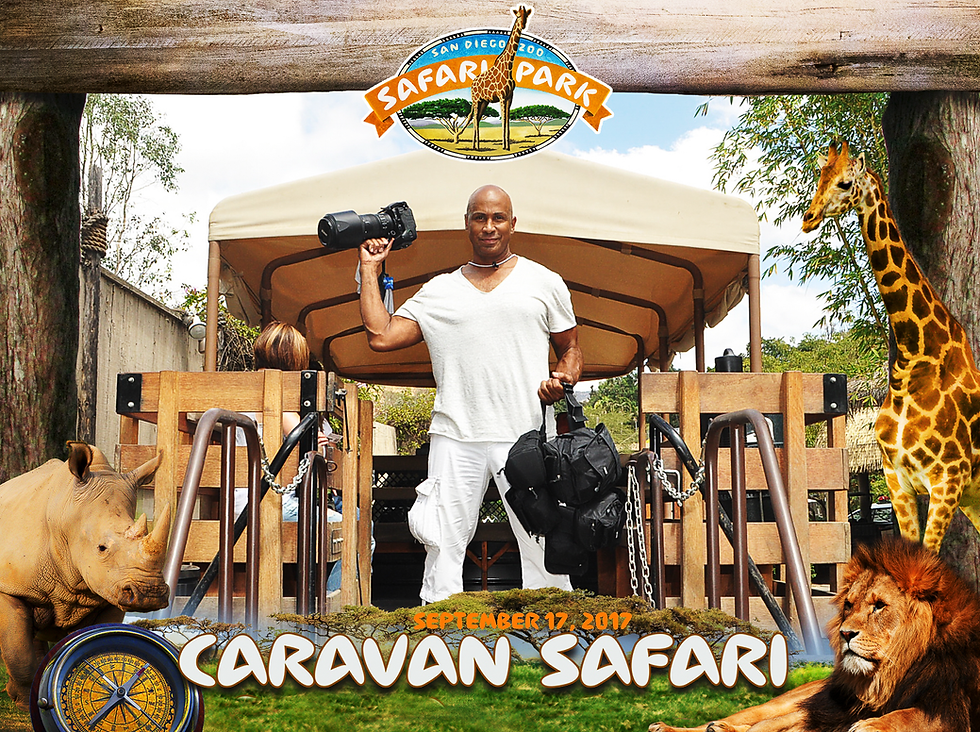
In Life Behind Bars…Except if You’re Free Vol. 2, you turn toward animals in the wild, including gorillas and big African cats. How does this next chapter expand the project’s conversation around freedom, survival, and human responsibility?
The journey for Volume 2 is still ahead of me. I have not yet stood face-to-face with a wild gorilla in Rwanda or watched lions, leopards, and cheetahs move freely across the plains of Kenya and Tanzania. Because of that, I cannot honestly say how the experience has changed me yet.
What I can say is that I expect it to be one of the most profound experiences of my life.
For years, I have photographed animals in zoos, sanctuaries, and wildlife preserves. Soon, I will have the opportunity to photograph them in the environments where they truly belong. I imagine the greatest challenge will be controlling my own excitement. As a photographer, my responsibility is not to interfere or direct the moment. My job is to be present, patient, quiet, and observant.
This second volume is dedicated to Dian Fossey, whose groundbreaking work in mountain gorilla conservation has inspired generations of wildlife advocates. Alongside the gorillas, the project will also document Africa’s great cats — the lion, leopard, and cheetah.
The first goal is to highlight the conservation efforts of Rwanda, Kenya, and Tanzania. The second is to create an emotional connection between people and these animals through powerful imagery and storytelling. The third is to create a comparison between animals in captivity and animals in the wild.
By documenting gorillas and big cats in both environments, we hope to open a deeper conversation about freedom, survival, conservation, and humanity’s responsibility toward the natural world.

You participated in Clio Art Fair in September 2025, presenting your work alongside independent artists in New York. What was that experience like for you, and how did audiences respond to the connection between fine art photography and wildlife conservation?
Clio Art Fair was an incredible experience because it was my first major art fair.
For the first time, I was able to step back, blend into the crowd, and simply watch complete strangers experience my work. As an artist, that is rare. You are no longer explaining the photographs. You are witnessing real reactions.
What fascinated me most was watching visitors move between the images and the written stories that accompanied them. I learned very quickly that creating an emotional connection requires more than a beautiful photograph. Every image needs a story. When viewers understand the struggle, resilience, personality, or history behind an animal, the photograph becomes much more than art. It becomes an experience.
That reinforced one of the central goals of Life Behind Bars. The photographs may attract people first because of beauty, but the story behind the image is what creates empathy. Once that connection is made, people become more open to the conservation message.
The response was extremely encouraging. Many people were surprised by how naturally fine art photography and wildlife conservation worked together. They came to appreciate the images as works of art, but they left talking about the animals, their stories, and the importance of protecting them.
For me, that is the perfect outcome. Art becomes the doorway, and conservation becomes the conversation.
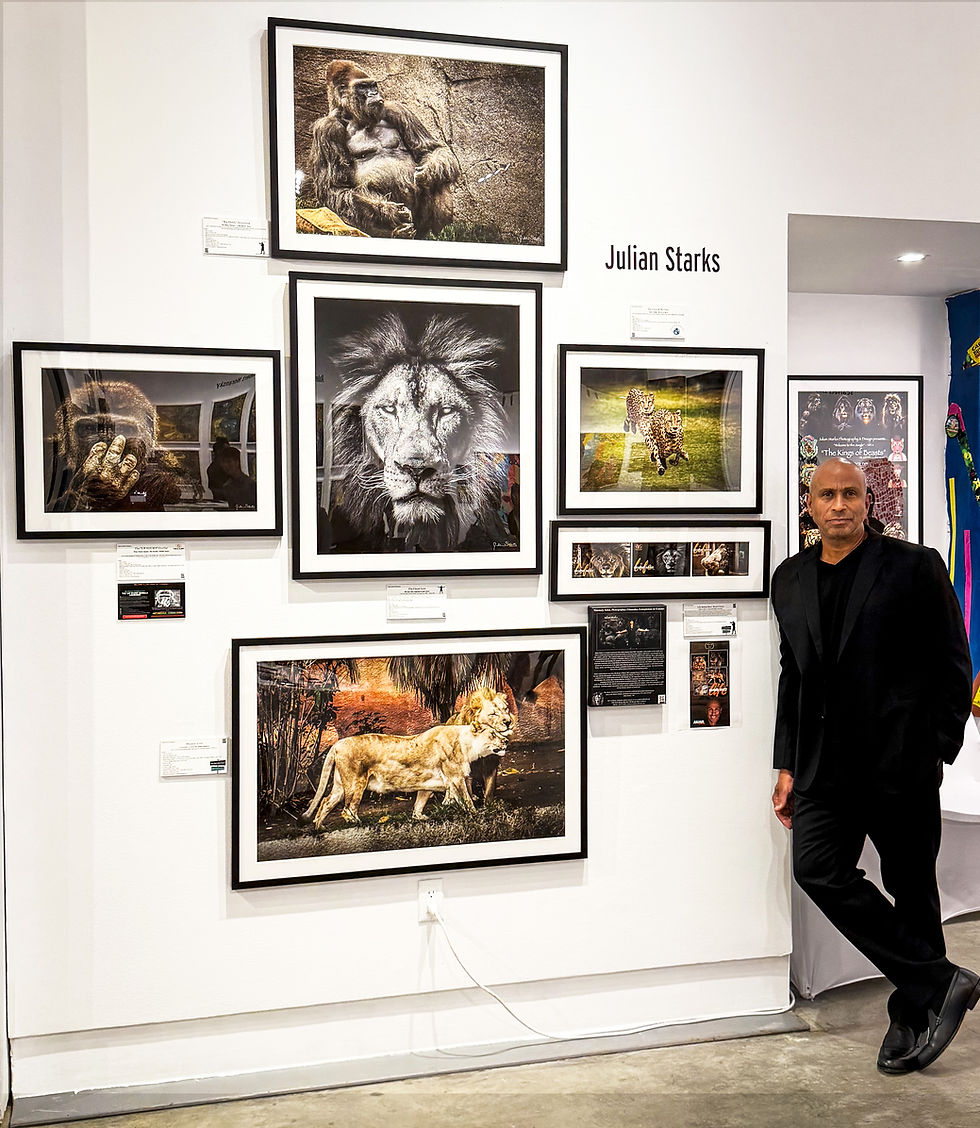
At the heart of your work is the desire to tell stories for the voiceless. When someone stands in front of one of your animal portraits, what do you hope they feel first — beauty, empathy, responsibility, or something else entirely?
I hope the image stops them in their tracks.
Before they read a caption or hear the story, I want the photograph itself to pull them in. I want them to become curious about the animal they are looking at. I want them to ask: Who is this animal? What is its story?
From there, I hope the image creates empathy. These animals are among the most beautiful and extraordinary creatures on Earth, but they are also vulnerable. Whether they are in captivity, in a sanctuary, or in the wild, each one has its own story, its own challenges, and its own place in the world.
If my work can help people see them as individuals rather than simply as animals, then I have accomplished something meaningful.
Ultimately, I hope empathy leads to responsibility. I want viewers to leave asking themselves: What can I do to help preserve these animals and the habitats they depend on?
Conservation does not always begin with a grand gesture. Sometimes it begins with awareness, education, or supporting the organizations that dedicate their lives to protecting wildlife.
Most importantly, I hope people share the experience with others. Bring children to see these animals. Tell friends about them. Visit and support reputable zoos, sanctuaries, preserves, and conservation organizations. The more people who develop a connection with these animals, the greater the chance we have of protecting them for future generations.
If someone walks away from one of my portraits feeling inspired, connected, and motivated to care, then the photograph has done exactly what it was meant to do. It has given a voice to those who cannot speak for themselves.

Julian Starks’ work begins with the image, but it does not end there.
His photographs ask us to look closely, then look again. A lion is not only a symbol of strength. A gorilla is not only a figure of wilderness. A cheetah is not only speed. In Starks’ work, each animal becomes an individual presence, carrying its own force, vulnerability, intelligence, and mystery.
What makes Life Behind Bars compelling is not only its visual beauty, but its refusal to simplify the lives of animals into one emotion. These images are not only about captivity, nor are they only about freedom. They exist in the complicated space between admiration and responsibility.
Through photography, books, film, and nonprofit advocacy, Starks builds a practice where art becomes a form of attention. He reminds us that conservation does not begin in statistics or policy alone. It often begins in a moment of recognition — a face, a gaze, a story, a photograph that makes us care.
And perhaps that is the quiet power of his work: it gives viewers a reason to stop, and then a reason to act.
You can learn more about Julian Starks and his work via these links: Website: Julian Starks Instagram: @visionsoftheworldorg
Comments