

Inside the Studio: Megan Emily Ely

Megan Emily Ely’s work unfolds like a quiet passage into another world, one shaped by imagination, memory, and a deep emotional undercurrent. Drawing from fairytales, dreams, and childhood wonder, her paintings exist in a space where reality softens and something more symbolic takes hold.
Her visual language carries both light and shadow. There is a sense of innocence, but also complexity, where beauty and unease coexist. Influenced by literature, surrealism, and illustration, her work invites viewers into suspended moments that feel both familiar and otherworldly.
At the center of her practice is storytelling, not as something fixed, but as something open. Her paintings do not explain themselves fully. Instead, they offer fragments, allowing space for interpretation, emotion, and personal connection.
Nature and animals often appear as quiet anchors within these surreal environments, grounding the work while expanding its sense of wonder. These elements reflect both personal affinity and a broader sensitivity toward the world around us.
In this Inside the Studio conversation, Megan Emily Ely reflects on imagination, mysticism, storytelling, and the role of art in creating space for reflection and escape.

Read on to learn more in an exclusive interview with Megan Emily Ely:
Your work draws deeply from fairytales, dreams, and childhood imagination. How have these early influences evolved into the visual language you use today, and what continues to draw you back to these worlds?
From a very young age, imagination was not just a creative outlet for me—it was essential. It offered a space for escape, joy, and possibility beyond everyday life, especially during both difficult and mundane moments. I was drawn to the layered beauty and darkness of Grimm fairytales, the surreal logic of Alice in Wonderland, and the storytelling and illustrative style of Chris Van Allsburg and Beatrix Potter. I also felt an early connection to surrealists like Salvador Dalí, René Magritte, and M.C. Escher, who showed me that reality could be fluid and symbolic. As my work has evolved, those influences have matured with me—the sense of wonder remains, but now carries more emotional depth. As adults, we still face adversity and monotony, and I believe fantastical, surreal worlds continue to offer something essential: a sense of hope, curiosity, and expansion of perception that reality alone cannot always provide.

You describe your practice as rooted in mysticism and wonder. How do you balance narrative openness with visual clarity, allowing viewers to form their own interpretations while still guiding an emotional experience?
I’m drawn to presenting only a fragment of a story, a moment suspended in time, rather than a fully resolved narrative. I like offering just enough of a scene to suggest a larger world, allowing the viewer to step in and layer their own meaning based on their perspective and experience. At the same time, I’m intentional about maintaining visual clarity through atmosphere, color, and expressions, so there is still an emotional direction guiding the work. It becomes a balance between structure and openness, where the painting holds a quiet sense of intention while remaining expansive enough for personal interpretation.
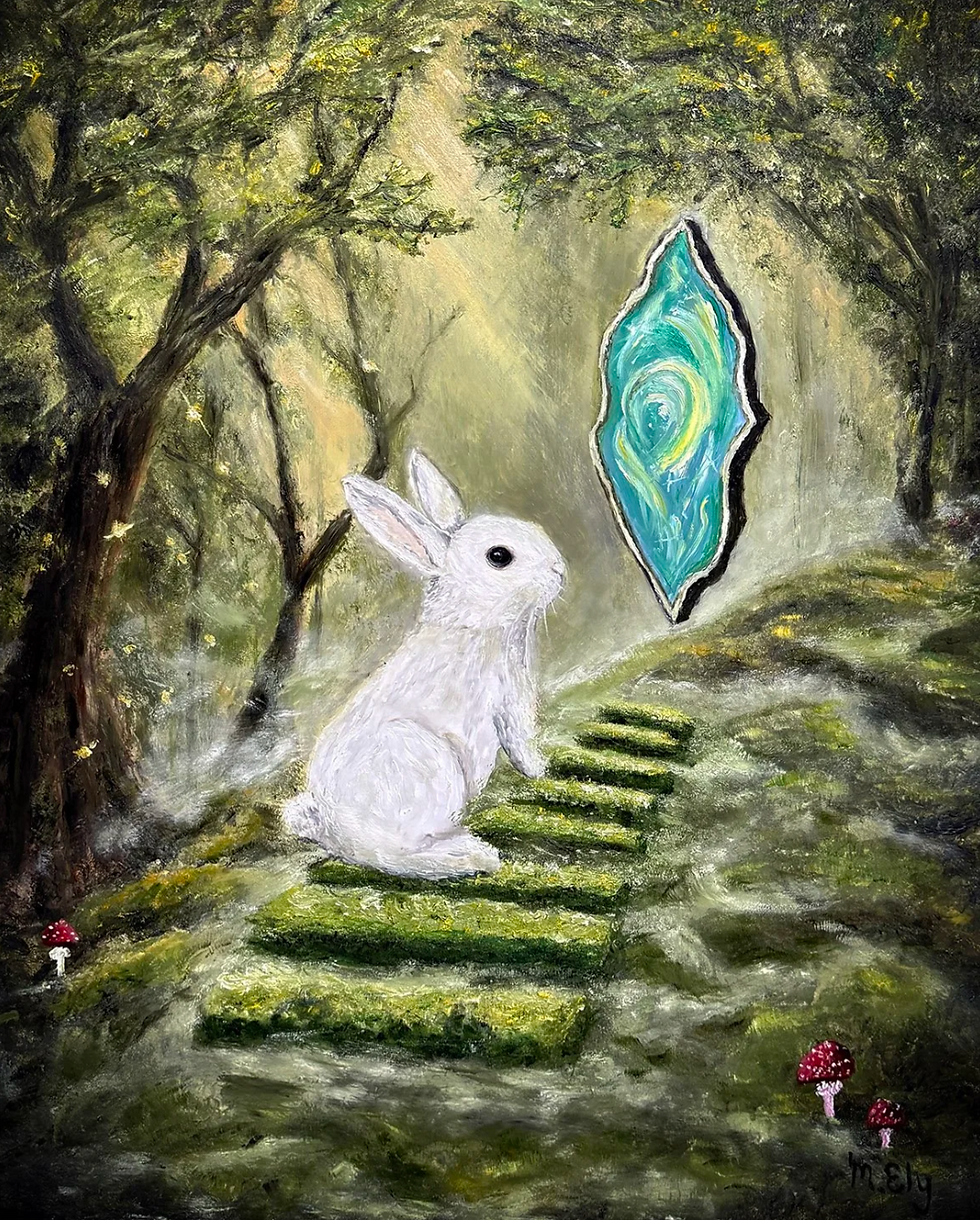
Coming from a background as a Design Director at Estée Lauder, how has your experience in the fashion and beauty industry shaped your approach to composition, color, and storytelling in your fine art practice?
My background as a Design Director, particularly in the fashion and beauty industry, has deeply shaped my approach to fine art by instilling a strong sense of balance, refinement, and visual precision. It informs the polished quality of my paintings and the way I think about composition, color, and storytelling—how each element works together to guide the eye and evoke emotion. It also made developing my personal visual language and brand feel intuitive and fluid. In many ways, my fine art feels like an extension of that discipline, but with complete creative freedom, allowing me to bring a high level of finish to work that is otherwise deeply personal and imaginative.

Your paintings often feel like fragments of a larger, unseen story. How do you decide what to reveal within a composition, and what to leave intentionally unresolved?
My ideas often begin as a vision—sometimes a full scene, other times a collection of symbolic elements that come together into a single moment within a larger narrative. I tend to focus on that specific moment of quiet tension or discovery, almost like a still frame from an unseen story, revealing just enough to suggest what lies beyond. What I leave unresolved is just as important as what I show, as it invites curiosity and allows the viewer to build their own meaning. I want the work to spark thought and imagination, creating space for both shared and individual interpretations.

Nature and animals appear as recurring elements in your work, often within surreal or magical settings. What role do they play in your storytelling, and how do they connect to your personal values and advocacy?
Animals and nature are deeply personal elements within my work. From a young age, I felt a strong connection to animals—often more so than to people—as they represent a sense of purity, gentleness, and honesty that I found comforting. In contrast to the complexities and, at times, harshness of human nature, animals embody a quiet integrity and tender love that continues to resonate with me. Within my paintings, they often act in place of humans and are emotional anchors or symbolic guides that ground the surreal environments while enhancing their sense of wonder. They reflect both my personal affinity and a broader appreciation for their inherent beauty and innocence. I donate a portion of my sales toward animal rescue organizations.

Your practice spans original works, commissions, and collaborations with design-forward brands. How do you navigate the relationship between personal expression and applied creative work without losing the integrity of your artistic voice?
I consider my original oil paintings to be the most direct and unfiltered expression of my artistic voice, a space where I can explore ideas freely without constraint. At the same time, my background in design has given me a genuine appreciation for collaboration, and I enjoy working with brands and individuals to develop shared visions. The key for me is alignment—I take on projects that resonate with my values, interests, and aesthetic, where there is a natural creative connection. When that spark is there, I’m able to contribute meaningfully while maintaining the integrity of my voice.

You exhibited at the 20th edition of Clio Art Fair in New York. What was that experience like for you, and how did engaging with an international audience shape your perspective on your work?
Exhibiting at the 20th edition of Clio Art Fair was an incredibly meaningful experience, especially showing in my home city of New York at that level. It was both exciting and affirming to present my work in an international context and to connect with a diverse audience of artists, collectors, and curators. The experience broadened my perspective on how the work is received and interpreted and created valuable opportunities for sales, connection, and growth. It was as much about community and exchange as it was about exposure.
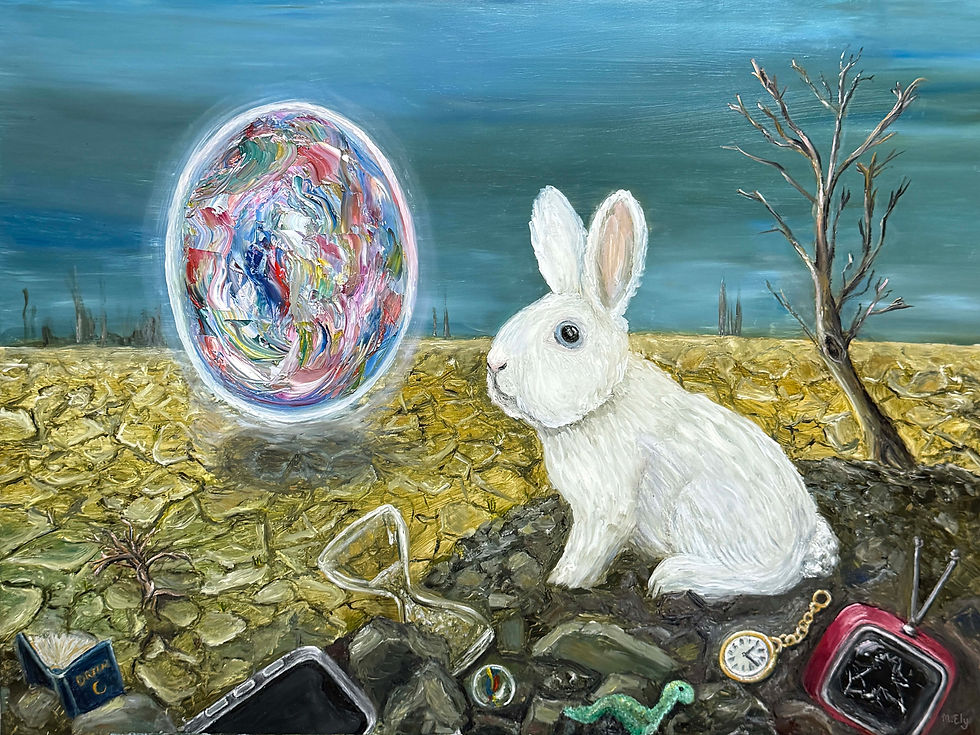
Your work invites viewers into imaginative, almost otherworldly spaces. In a time that often feels fast-paced and overwhelming, what role do you believe art like yours plays in offering pause, escape, or reflection?
In a time that often feels fast-paced and overwhelming, I believe art that invites imagination and wonder plays an important role in offering pause and reflection. My work aims to create a space where viewers can step outside of immediate reality and reconnect with a sense of possibility, joy, and curiosity. While whimsical or fantastical work can sometimes be seen as light, I view it as deeply powerful—a quiet form of resistance against the chaotic mundanity of modern life. We may not be able to control what is happening externally, but we can create internal realities within ourselves through imagination that provide a sense of wonder and feel like home.

Megan Emily Ely’s work does not seek to explain—it invites.
Her paintings exist in the space between reality and imagination, where meaning is not fixed but felt. The longer you stay with them, the more they begin to unfold, not as clear narratives, but as emotional landscapes shaped by memory, symbolism, and quiet tension.
There is a softness in her work, but also intention. A sense that each element has been placed with care, yet left open enough to breathe.
In a world that often demands clarity and speed, her work offers something else entirely, a moment to pause, to wander, and to imagine beyond what is immediately visible.
You can learn more about Megan Emily Ely and her work via these links: Website: Megan Emily El Instagram: @elyiara_studio Artsy: Megan Emily Ely
Comments